
Dog Keeps Sneezing - Harmless or a Cause for Concern?
A single sneeze in a dog is usually nothing to worry about. Just like humans, dogs use the sneeze reflex to react to dust, pollen, or other irritants in the nose. However, if your dog keeps sneezing, suddenly develops repeated sneezing fits, or also has nasal discharge, coughing, or unusual breathing sounds, it is worth taking a closer look.
Frequent sneezing can have harmless causes, but it may also be linked to a foreign object in the dog’s nose, inflammation, infection, or other medical problems.
Why Do Dogs Sneeze?
Sneezing is primarily a protective reflex. When the lining of the nose or upper airway becomes irritated, the body triggers a sneeze to help remove the irritant.
This may be caused by dust, plant particles, pollen, dirt, or other substances. Conditions affecting the upper respiratory tract can also trigger frequent sneezing.
A dog that sneezes once or twice after sniffing intensely and then continues behaving normally is therefore not necessarily showing signs of illness.
What matters most is how often the sneezing occurs, how long it lasts, and whether other symptoms are present.
When Is Sneezing in Dogs Still Normal?
Occasional sneezing is part of everyday life for many dogs. Some dogs are particularly sensitive to changes in their surroundings.
Common harmless triggers include dust from blankets, dry indoor air, pollen, strong odors, perfume, room sprays, or household cleaning products.
If your dog sneezes after a walk, think about what the dog has just been doing. If it spent several minutes sniffing deeply in grass, soil, or along a dusty path, a temporary irritation of the nasal passages may be enough to trigger a few sneezes.
If the sneezing stops quickly and the dog otherwise appears healthy, there is usually no immediate reason for concern.
Why Do Dogs Sneeze While Playing?
A dog that sneezes while playing is not automatically ill.
Some dogs make short sneezing sounds when they are excited, wrestling, chasing another dog, or engaging in energetic play.
This is sometimes referred to as play sneezing or communicative sneezing.
If it only happens during playful situations and stops afterward, it is usually related to excitement rather than illness.
Dog Keeps Sneezing – Possible Causes
Why Is My Dog Suddenly Sneezing All the Time?
If a dog suddenly begins sneezing repeatedly or has intense sneezing fits, it should be watched more closely.
This is especially important if the dog keeps sneezing repeatedly, shakes its head, or rubs its nose with a paw.
One possible cause is a foreign object.
Foreign Object in the Nose
Dogs can inhale small plant particles while sniffing outdoors.
Possible foreign objects include:
grass awns
small plant fragments
dirt
dust
seeds
A foreign object in the dog’s nose can cause sudden and intense sneezing.
Typical signs may include:
sudden violent sneezing
repeated head shaking
rubbing the nose
restlessness
discharge from one nostril
occasional bleeding from one nostril
Do not attempt to remove deeply lodged foreign objects with tweezers or other tools.
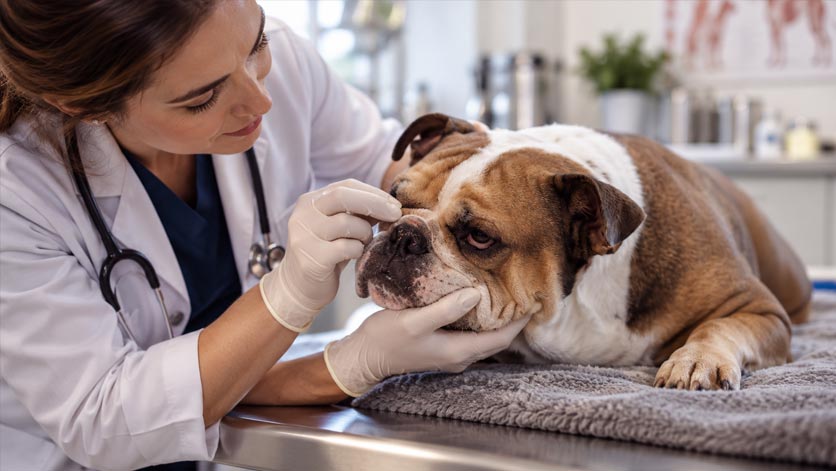
If a foreign body is suspected, a veterinarian should examine the nose.
Can Allergies Make a Dog Sneeze Constantly?
Yes. An allergy in dogs can irritate the respiratory tract.
However, sneezing alone is not enough to diagnose an allergy because many different conditions can cause similar symptoms.
Possible environmental triggers include:
pollen
house dust
mold spores
fragrances
cleaning products
The timing of the symptoms can provide useful clues.
Does the dog sneeze more often after spending time in the garden? Does it happen mainly during a certain season? Does sneezing begin after the house has been cleaned?
These observations can be useful when discussing the problem with a veterinarian.
Infections and Inflammation
If a dog sneezes often and also has nasal discharge, coughing, lethargy, or reduced appetite, an upper respiratory condition may be involved.
Inflammation of the nasal lining can cause both sneezing and nasal discharge.
Respiratory infections may also cause coughing, fever, reduced energy, or changes in appetite.
People often describe this as a dog having a cold, but many different infections or inflammatory conditions can produce similar symptoms.
Whether the problem is a simple cold in dogs, another respiratory infection, or a different medical issue should be assessed by a veterinarian if the symptoms persist.
Dental and Tooth Root Problems
Not every cause of frequent sneezing originates directly in the nose.
The roots of some upper jaw teeth are located very close to the nasal cavity and surrounding structures.
Dental infections or other tooth root problems can therefore sometimes cause symptoms that initially look like a purely nasal problem.
For that reason, a veterinarian may also examine the mouth and teeth if sneezing continues for a longer period.
Nasal Mites and Parasites
Nasal mites can also occur in dogs.
Possible signs include sneezing, reverse sneezing in dogs, nasal discharge, nosebleeds, facial itching, and frequent head shaking.
However, these symptoms are not specific to nasal mites and can occur with several other conditions as well.
A veterinary examination is therefore necessary for a reliable diagnosis.
Changes Inside the Nasal Cavity
If sneezing continues over a long period, structural changes inside the nose may also be considered.
These can include polyps, chronic inflammation, or other abnormal tissue changes.
This does not mean that every dog with frequent sneezing has a serious condition.
However, symptoms that persist, become progressively worse, or mainly affect one side of the nose should be investigated.
Dog Sneezing With Nasal Discharge – What Should You Look For?
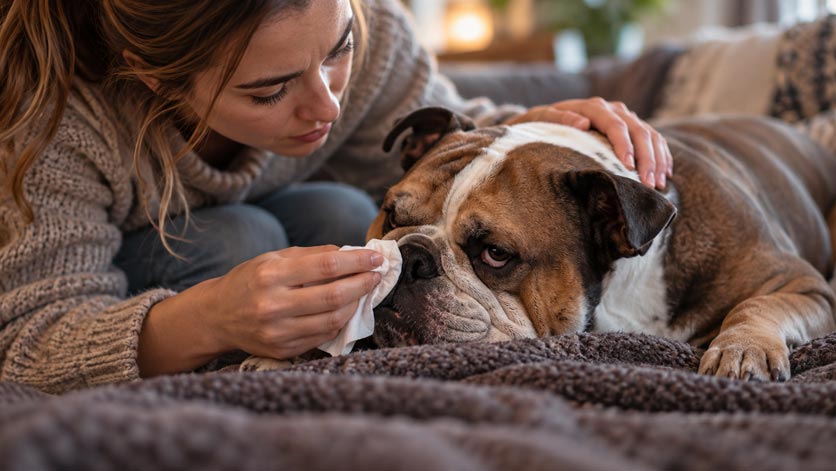
Nasal discharge in dogs can provide useful information.
It is important to look not only at whether discharge is present, but also at its color, consistency, and whether it comes from one or both nostrils.
Clear, watery discharge may occur with mild irritation.
Thicker mucus may indicate stronger irritation or inflammation.
Yellowish or green nasal discharge should be assessed by a veterinarian, particularly if other symptoms are present.
Blood from the nose requires special attention.
What Does One-Sided Nasal Discharge Mean in Dogs?
One-sided nasal discharge means that fluid is mainly coming from only one nostril.
This can occur with local problems such as a foreign object or certain conditions affecting the nasal cavity.
For a veterinarian, it can be useful to know whether the discharge comes from one nostril or both.
What Is Reverse Sneezing in Dogs?
With reverse sneezing in dogs, air is not forcefully expelled through the nose as it is during a normal sneeze.
Instead, the dog rapidly pulls air inward through the nose.
This can look and sound quite dramatic.
The dog may stand still with its neck extended while making snorting, honking, or choking-like noises.
Reverse sneezing is caused by irritation in the area of the nose and throat.
Occasional short episodes are common in many dogs and can be harmless.
However, frequent, increasingly severe, or prolonged episodes should be checked by a veterinarian.
If possible, record an episode on your smartphone. A video can help the veterinarian understand exactly what is happening.
Is Frequent Sneezing in Dogs Dangerous?
Not necessarily.
The overall situation matters more than the number of sneezes alone.
A healthy, active dog that sneezes a few times after sniffing grass should be assessed differently from a dog that has repeated sneezing attacks for hours, stops eating, and develops thick nasal discharge.
Always look at the complete picture.
When Should a Sneezing Dog See a Veterinarian?
If you are wondering when to see a veterinarian if your dog is sneezing, the clearest answer is this: the more unusual, severe, or persistent the symptoms are, the more important a veterinary examination becomes.
A veterinary visit is especially advisable if:
sneezing continues for several days
sudden, intense sneezing fits occur
the dog constantly rubs its nose
only one nostril is affected
thick, pus-like, or unusual nasal discharge appears
there is blood from the nose
the dog also coughs
the dog eats less or appears unusually tired
signs of pain are present
a foreign object is suspected
unusual breathing sounds occur
When Is Sneezing in a Dog an Emergency?
Breathing difficulties are more important than the sneezing itself.
If your dog is clearly struggling to breathe, breathing appears labored, or the dog’s overall condition deteriorates quickly, veterinary help should be sought immediately.
Breathing difficulty should not simply be monitored at home.
What Can Dog Owners Observe at Home?
Before a veterinary appointment, it can help to write down a few details.
When did the sneezing start? Does it happen mainly in the morning or at night? Is it worse outside than indoors? Does it regularly occur after walks?
Also check whether nasal discharge is present and whether it comes from one nostril or both.
Useful observations include:
Does the dog sneeze only occasionally or in long episodes?
Is there coughing or gagging?
Does the dog sneeze and snort at the same time?
Does it frequently rub its nose?
Is it shaking its head more than usual?
Is it eating and drinking normally?
Has its behavior changed?
Have new cleaning products, room sprays, or fragrances been introduced?
Has the dog recently spent time in tall grass?
A short smartphone video of a sneezing or reverse-sneezing episode may also be very useful.
Conclusion: Dog Keeps Sneezing – Observe Carefully, but Take Changes Seriously
Occasional sneezing is part of normal canine behavior. Dust, intense sniffing, dry air, pollen, or excitement may be enough to trigger it.
However, if a dog keeps sneezing, it is worth looking beyond the sneeze itself.
Did the problem start suddenly? Is there nasal discharge? Is only one side affected? Is the dog constantly rubbing its nose? Does the dog otherwise appear healthy?
These details often provide more useful information than the number of sneezes alone.
If sneezing becomes very intense, blood appears, discharge is mainly one-sided, breathing problems occur, or a foreign object is suspected, the dog should be examined by a veterinarian.
Not because every sneezing episode is dangerous, but because the actual cause often cannot be identified reliably from the outside.